SETU Ram Rajya Mission
Version 1 · Screen mockups

The platform,
screen by screen

Nine applications a Setu Unit would use. These are design mockups, not working software — but every number, label and rule on them comes from the model, so an official, a commissioner or a donor can see in three minutes what would otherwise take forty pages.

What you are looking at

All nine share one design, one fictional unit — Chandrapur Ward 7, 32,400 residents, 7,100 households — and a role switch in the header, because the same screen looking different to a resident, a worker, a jury member and an auditor is the governance argument.

The unit is fictional on purpose. No real ward has agreed to anything, and a mockup should never imply otherwise. Working prototypes come after the model is agreed.

Group one · Ask, work, account

The three that carry the argument

If the project built only these, it would still make its case: a way to ask, a way to earn, and a way to see where the money went.
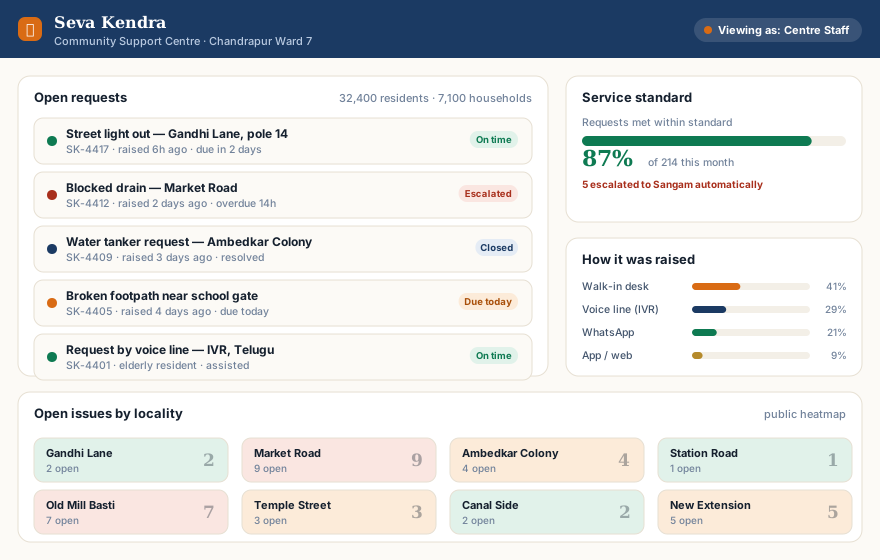
Seva Kendra mockup: a queue of open requests each with a ticket number and service-standard countdown, a panel showing 87 percent of requests met within standard with five escalated automatically, a breakdown of how requests arrived (walk-in 41 percent, voice line 29 percent, WhatsApp 21 percent, app 9 percent), and a public heatmap of open issues by locality.
1 · Seva Kendra — the Community Support Centre desk. Every request carries a ticket and a visible clock. Breach the standard and it escalates to the Sangam by itself, then appears on a public map. Note the channel mix: the walk-in desk and the voice line together carry seventy per cent of requests, which is exactly why neither is ever withdrawn.
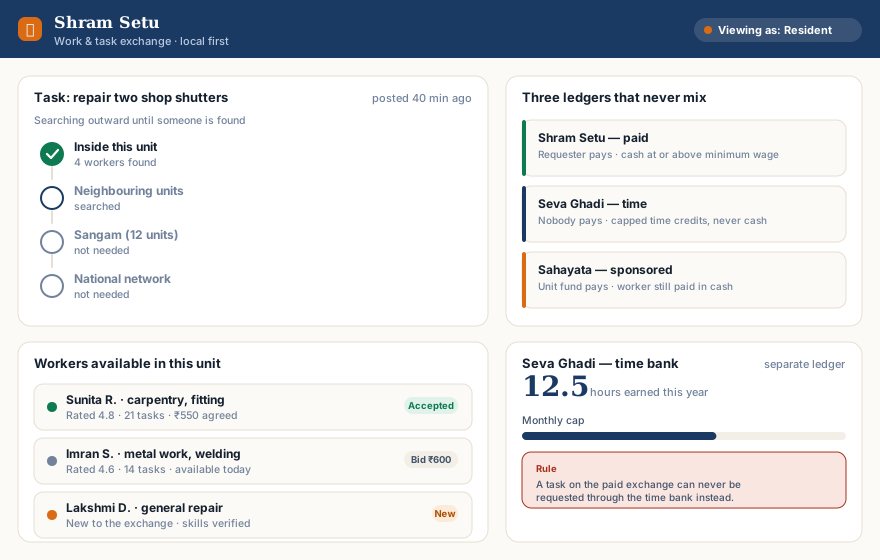
Shram Setu mockup: a local-first search showing four workers found inside the unit so the request never needed to escalate, a panel describing the three separate ledgers (paid work, time credits, fund-sponsored), a list of available local workers with ratings and agreed rates, and a Seva Ghadi time-bank balance with its monthly cap and the rule that paid tasks can never be requested through the time bank.
2 · Shram Setu — the work and task exchange. The escalation ring is the model's central mechanism made visible: search the unit, then the neighbours, then the cluster, then the country. The three ledgers sit side by side deliberately — paid work, neighbourly time credits, and tasks the fund pays for when the person asking cannot.
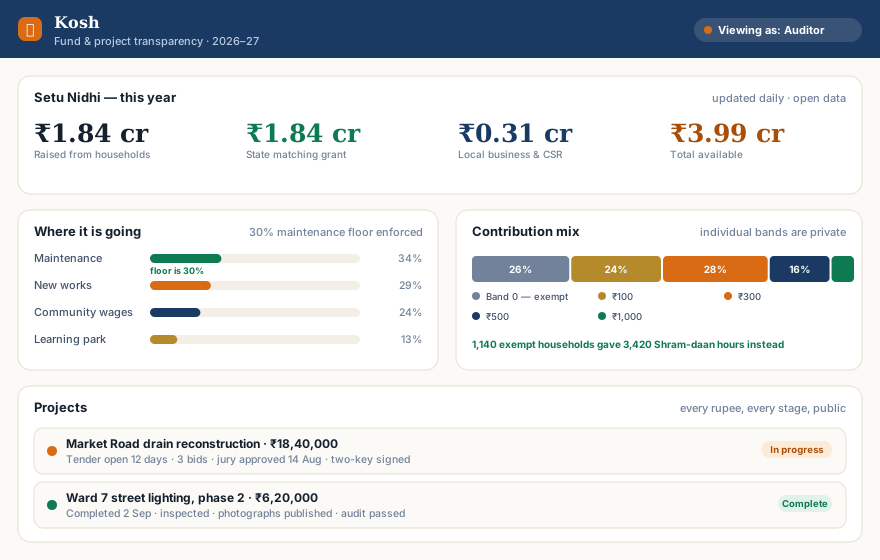
Kosh mockup: total fund of 3.99 crore made up of household contributions, an equal state match and business contributions; a spending breakdown showing maintenance at 34 percent against a 30 percent floor; a contribution band mix with individual bands marked private; a note that 1,140 exempt households gave 3,420 Shram-daan hours instead; and two projects with tender, bid, jury approval and audit status.
3 · Kosh — fund and project transparency. The band mix is shown in aggregate and each household's own band stays private, because a public list of who pays what becomes a public list of who is poor. The maintenance gauge sits above its floor. The Shram-daan line is the one that matters most: a quarter of households pay nothing and contribute anyway.
Group two · Decide, learn, care

Governance, learning and the difficult one
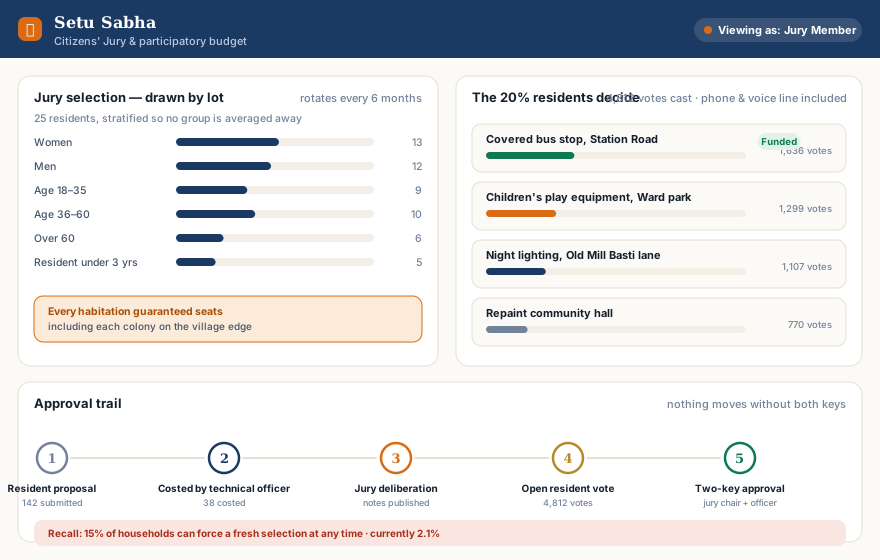
Setu Sabha mockup: a Citizens' Jury of 25 residents drawn by lot with its stratification by gender, age group and length of residence, and a guarantee of seats for every habitation; a participatory budget round with four proposals, vote counts and one marked funded; a five-step approval trail from resident proposal through costing, deliberation, open vote and two-key approval; and a recall petition tracker at 2.1 percent against a 15 percent threshold.
4 · Setu Sabha — participatory budgeting and the Citizens' Jury. The app that most separates this from every other community platform. A jury drawn by lot, stratified so no group is averaged away, with seats guaranteed to every habitation including the colonies on the village edge — because locality is the closest honest proxy available in a system that refuses to record caste.
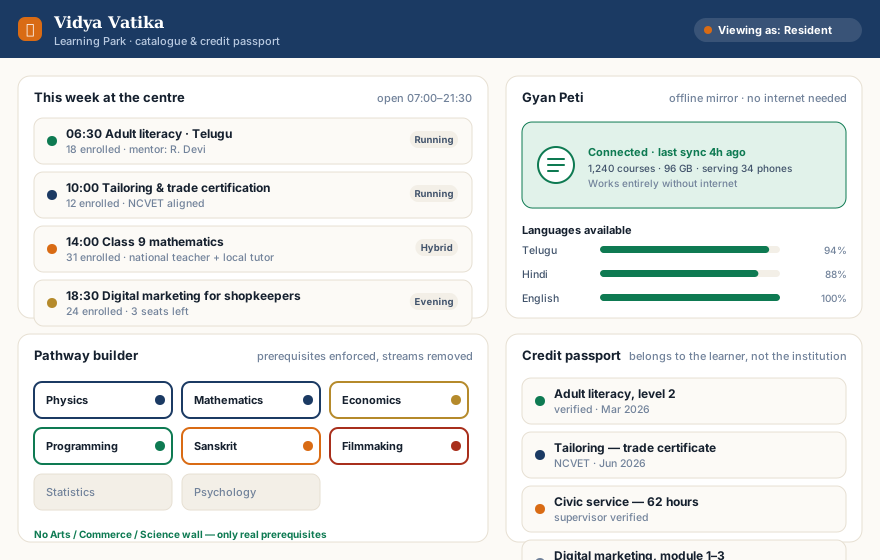
Vidya Vatika mockup: a weekly centre timetable from adult literacy at 6:30am to digital marketing at 6:30pm, each with a named local mentor; a Gyan Peti offline server panel showing 1,240 courses serving 34 phones with no internet needed and language coverage in Telugu, Hindi and English; a pathway builder with physics, mathematics, economics, programming, Sanskrit and filmmaking selected together; and a portable credit passport.
5 · Vidya Vatika — Learning Park catalogue and credit passport. Every course has a local mentor attached, because streaming a lecture into a room is not a school. The pathway builder shows the education argument directly: physics next to Sanskrit next to filmmaking, with real prerequisites kept and arbitrary walls gone.
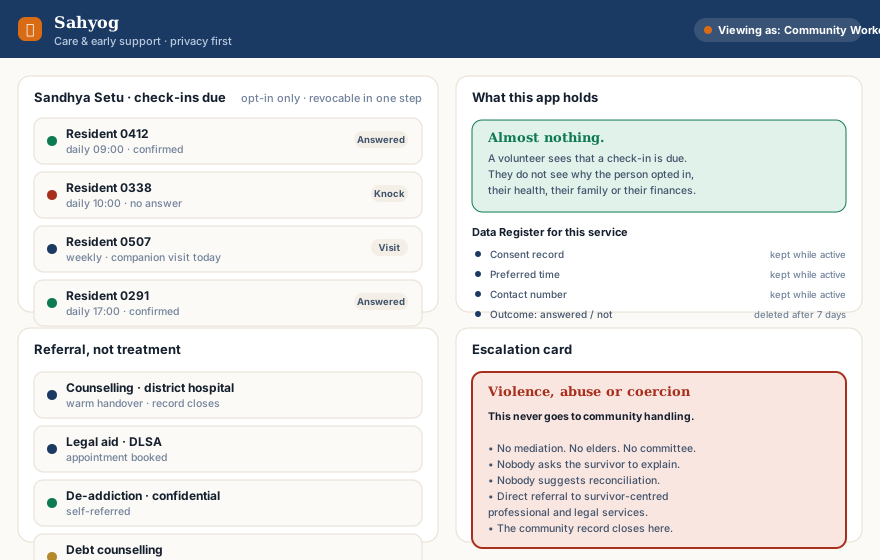
Sahyog mockup: a Sandhya Setu check-in roster listing residents only by number with outcomes answered, knock or visit, and a note that a missed check-in sends a person to the door and never a report; a panel stating the app holds almost nothing, with its Data Register listing four fields and their deletion dates; a referral list; and a red escalation card stating that violence, abuse or coercion never goes to community handling.
6 · Sahyog — care and early support. The most sensitive app, so the design argument is subtraction. Residents appear as numbers. A volunteer sees that a check-in is due, never why the person opted in. Its Data Register is on the screen itself. And the escalation card removes violence and abuse from community handling entirely.
Group three · Serve, belong, know

Youth, culture and the national layer
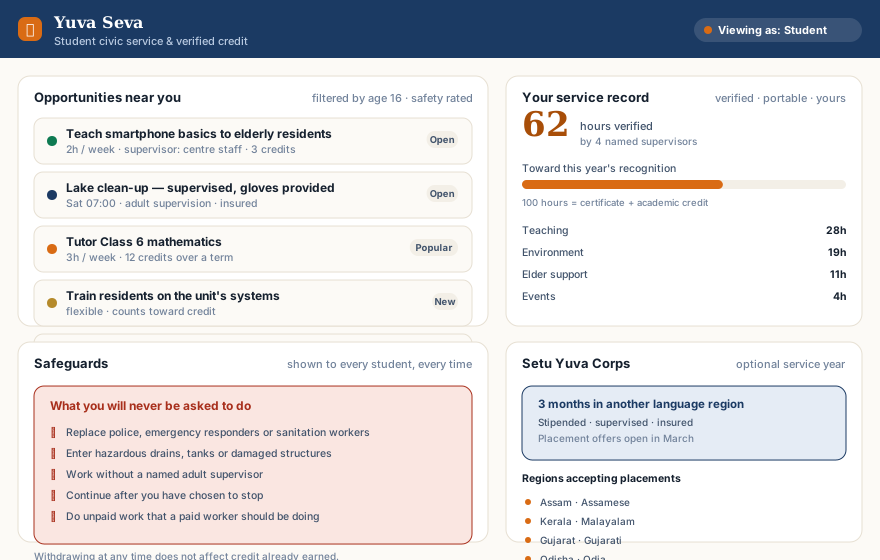
Yuva Seva mockup: an opportunity board filtered to age sixteen with safety ratings, including teaching elderly residents smartphone basics and a tree-survival survey feeding the environmental ledger; a verified service record of 62 hours across four named supervisors; a red safeguards panel listing five things a student will never be asked to do; and a Setu Yuva Corps panel offering three months in another language region.
7 · Yuva Seva — student civic service and verified credit. The safeguards panel is shown to the student on every visit rather than buried in a policy document. Note two of the opportunities: training other residents on the unit's systems, and surveying tree survival for the environmental ledger — service that is genuinely useful rather than decorative.
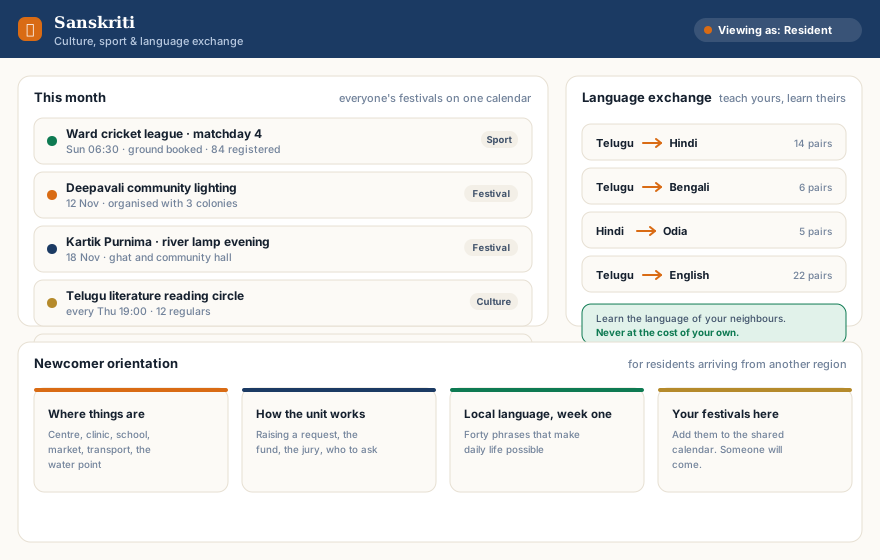
Sanskriti mockup: a shared monthly calendar carrying a cricket league, Deepavali lighting organised with three colonies, a Kartik Purnima river lamp evening, a Telugu reading circle and a seniors' music evening with school students; a language exchange board pairing Telugu with Hindi, Bengali, Odia and English; and a four-card newcomer orientation pack.
8 · Sanskriti — culture, sport and language exchange. One calendar carrying everyone's festivals, so attending someone else's is ordinary rather than remarkable. The exchange board runs in both directions on purpose: you teach your mother tongue in the same room where you learn the local one.
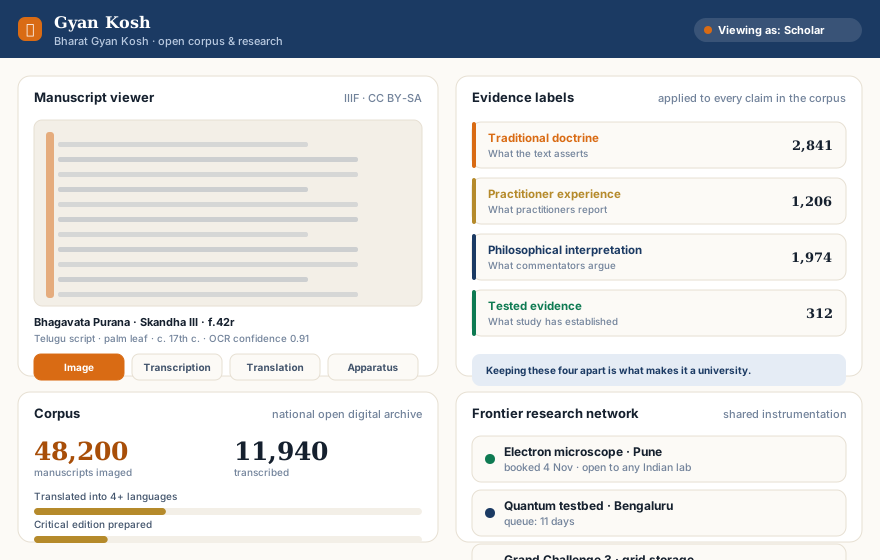
Gyan Kosh mockup: a manuscript viewer showing a 17th century Telugu palm-leaf folio with tabs for image, transcription, translation and apparatus; an evidence-label panel counting claims tagged as traditional doctrine, practitioner experience, philosophical interpretation and tested evidence; corpus totals of 48,200 manuscripts imaged and 11,940 transcribed; and a frontier research panel showing shared instrumentation bookable by any Indian lab.
9 · Gyan Kosh — the Indic knowledge corpus and research network. The evidence labels are the whole argument. Traditional doctrine, practitioner experience, philosophical interpretation and tested evidence are counted separately and shown separately — and the fact that tested evidence is much the smallest count is stated rather than hidden. That honesty is what will let serious universities abroad collaborate.
What comes next

From mockup to working prototype

These are pictures. The next version makes the first three clickable — seeded with sample data, running entirely in the browser, with no account and no server.

Application Stage Depends on
Seva KendraMockupService standards agreed per category
KoshMockupBand structure and matching rules settled
Shram SetuMockupLocal task database design, built to federate upward later
Setu SabhaMockupJury selection and stratification rules
Vidya VatikaMockupCredit recognition route; Gyan Peti hardware spec
SahyogMockupConsent model and Data Register format — must be settled first
Yuva SevaMockupSchool and university credit recognition
SanskritiMockupNothing — could be built today
Gyan KoshMockupCorpus standards and the evidence-label taxonomy

The mockups are SVG files in assets/img/mockups/, generated by a script in tools/. They are text, not pictures of text — so they are editable, sharp at any size, and a few kilobytes each.